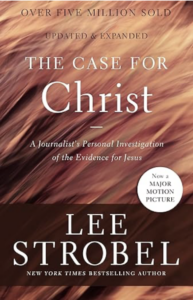

Why we recommend this book? Often times people approach God from their mind’s perspective and try to rationalize and use logic to determine their beliefs (or lack thereof). Often our beliefs are shaped by perception and untruths. Learn how one atheist set out to prove his wive wrong and ended up one of Gods most dedicated believers. Lee Strobel (lawyer, former legal reporter for a National publication, former atheist, and now born-again Christian), does a beautiful job in making the case for why both the bible and its content is real. He set out to disprove Christ and instead became born-again. We invite you to learn why.
— The Journey from Atheist to Born Again and Why —
” Is there credible proof that Jesus of Nazareth really is the Son of God?”
“My wife became a Christian and I wanted to prove her wrong.”
Lee Strobel: Former Lawyer, Atheist, Legal Editor, and Skeptic — and now Christian Pastor at Woodlands Church
Lee Strobel at: Lee Strobel Ministries
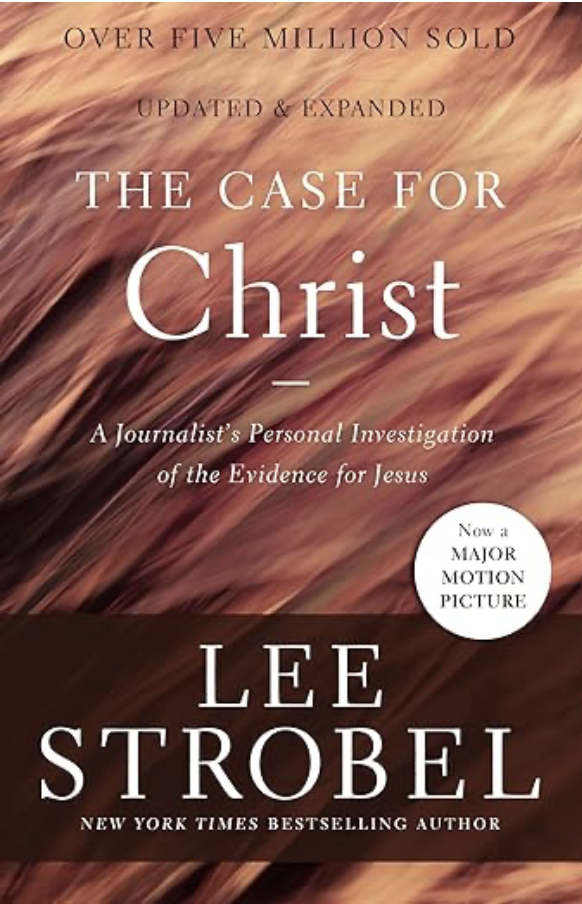
The Case for Christ
In The Case for Christ, Lee Strobel, former legal editor of the Chicago Tribune and New York Times bestselling author, retraces his own spiritual journey from atheism to faith and builds a captivating case for Christ's divinity.
1. The Challenge
A Skeptic Investigates Christianity
Evidence:
Lee Strobel was an award-winning legal affairs reporter trained to evaluate evidence. After his wife became a Christian, he spent nearly two years interviewing scholars, historians, doctors, and archaeologists to determine whether Christianity could withstand scrutiny.
Related Scriptures:
Luke 1:1-4 — Luke describes carefully investigating eyewitness testimony.
1 Peter 3:15 — Christians are encouraged to give reasons for their faith.
2. Can the Gospels Be Trusted?
The Documents Were Written Too Early to Become Legend
Evidence:
The Gospels were written within the lifetime of eyewitnesses who could challenge false claims. Thousands of ancient manuscript copies exist, allowing scholars to verify the text with remarkable accuracy. Archaeological discoveries have repeatedly confirmed locations, customs, and people mentioned in the accounts.
Related Scriptures:
Luke 1:1-4
John 19:35
2 Peter 1:16
3. Did Jesus Really Claim to Be God?
His Words and Actions Pointed to Divinity
Evidence:
Jesus forgave sins, accepted worship, claimed authority over judgment, and used titles associated with God. Jewish leaders accused Him of blasphemy because they understood these claims as making Himself equal with God.
Related Scriptures:
John 8:58
John 10:30-33
Mark 2:5-12
John 20:28
4. Did Jesus Fulfill Messianic Prophecies?
Ancient Predictions Matched His Life
Evidence:
Scholars identified dozens of prophecies written centuries before Jesus that align with His life. These include His birth in Bethlehem, betrayal for silver, suffering, crucifixion, and resurrection expectations.
Related Scriptures:
Micah 5:2 — Birth in Bethlehem
Isaiah 53:3-12 — Suffering servant
Zechariah 11:12-13 — Thirty pieces of silver
Psalm 22 — Details resembling crucifixion
5. Did Jesus Actually Die?
Medical Evidence Supports His Death
Evidence:
Roman executioners were highly skilled and faced severe penalties for failure. The scourging, crucifixion, spear wound, and burial make survival extremely unlikely. Medical experts interviewed by Strobel concluded Jesus was unquestionably dead.
Related Scriptures:
John 19:31-37
Mark 15:44-45
Isaiah 53:5
6. Was the Tomb Empty?
Even Opponents Acknowledged the Missing Body
Evidence:
The tomb was publicly known. If Jesus’ body remained there, Christianity could have been stopped immediately. Instead, critics claimed the body was stolen, indirectly admitting the tomb was empty.
Related Scriptures:
Matthew 28:11-15
Mark 16:1-6
Luke 24:1-3
7. Did People Really See the Risen Jesus?
Multiple Eyewitnesses Reported Encounters
Evidence:
Jesus reportedly appeared to individuals, small groups, skeptics, and more than 500 people at one time. These appearances occurred over weeks, reducing the likelihood of hallucination or mistaken identity.
Related Scriptures:
1 Corinthians 15:3-8
John 20:24-29
Luke 24:36-43
8. Why Did Skeptics Become Believers?
Enemies and Doubters Were Convinced
Evidence:
Jesus’ brother James was initially skeptical. Saul of Tarsus actively persecuted Christians. Both became devoted followers after claiming encounters with the risen Christ and suffered greatly for those beliefs.
Related Scriptures:
John 7:5
Acts 9:1-22
1 Corinthians 15:7-8
9. Why Did the Disciples Risk Everything?
Their Actions Matched Their Claims
Evidence:
The disciples gained no wealth, power, or status. Instead, they faced imprisonment, beatings, and death. While people may die for a lie they think is true, few willingly die for a lie they know they invented.
Related Scriptures:
Acts 4:18-20
Acts 5:40-42
2 Corinthians 11:23-28
10. The Resurrection Explains the Facts
One Explanation Fits the Evidence Best
Evidence:
Strobel examined alternative theories: conspiracy, hallucination, legend, and survival from crucifixion. He concluded that none adequately explained the empty tomb, post-resurrection appearances, rapid growth of Christianity, and transformation of eyewitnesses.
Related Scriptures:
1 Corinthians 15:14-17
Romans 1:4
Acts 2:22-32
Final Verdict
The Question That Changed Everything
Evidence:
Strobel concluded that Christianity rests on a historical claim, not merely a philosophy or moral system: Jesus died, was buried, and rose again. After testing the evidence as a journalist, he found the cumulative case persuasive enough to place his faith in Christ.
Related Scriptures:
John 20:30-31
Romans 10:9
1 Corinthians 15:20-22